Every job below is one we do ourselves across Hanford.
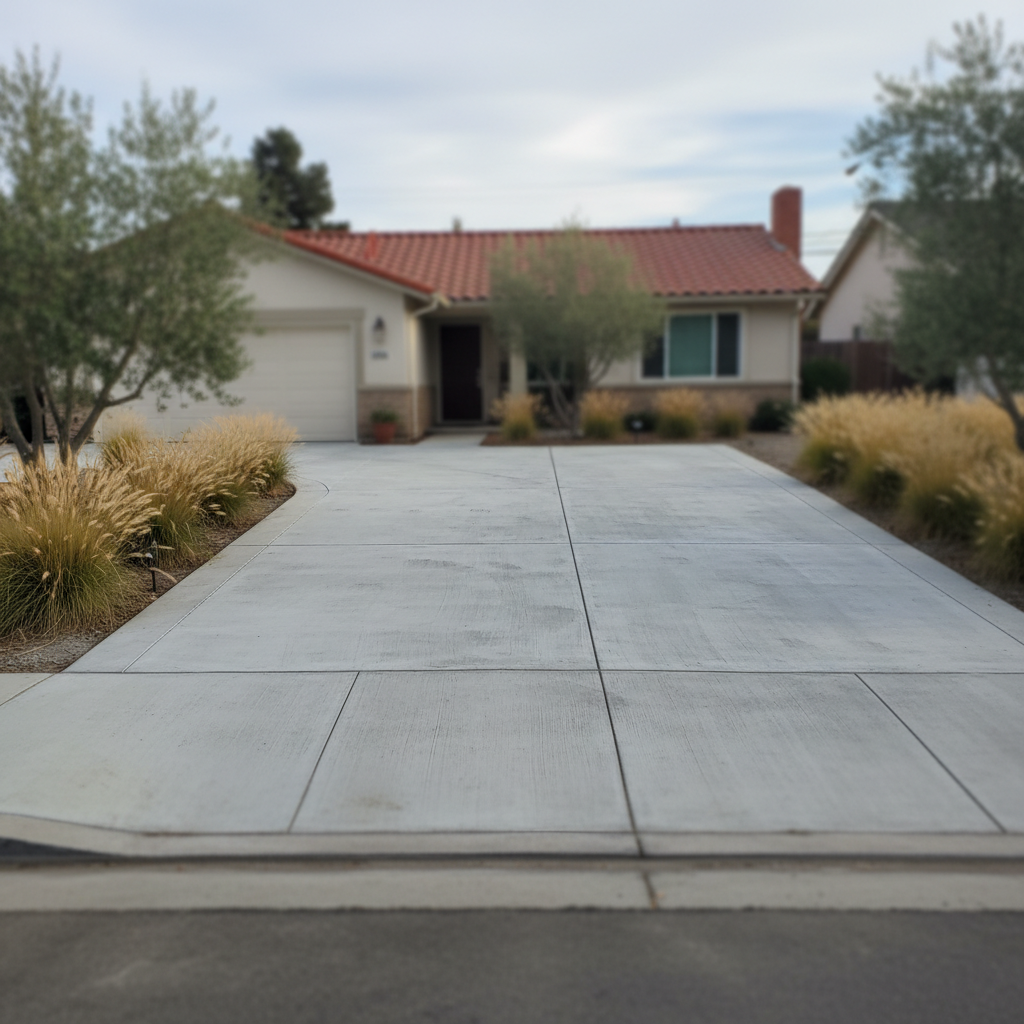
A driveway carries more weight than any other slab on your property, so we run rebar instead of wire mesh that sinks to the bottom of the pour. We grade the base to pitch water away from your garage and cut joints every 10 to 12 feet so the slab cracks where we tell it to. Expect to stay off it for about 3 days and keep vehicles off for closer to a week while it cures.
Patios take less load than a driveway but more foot traffic and weather, so we focus on a clean broom or stamped finish and a slope that sheds rain away from the house. We can tie a new patio slab into an existing one with a doweled joint if you're extending a space rather than starting from scratch.
Stamped concrete gets you the look of flagstone, slate or brick without the gaps where weeds and ants move in. We release the color while the slab is still plastic so the texture sets before it cures, then seal it once it's fully cured to protect the color from fading.
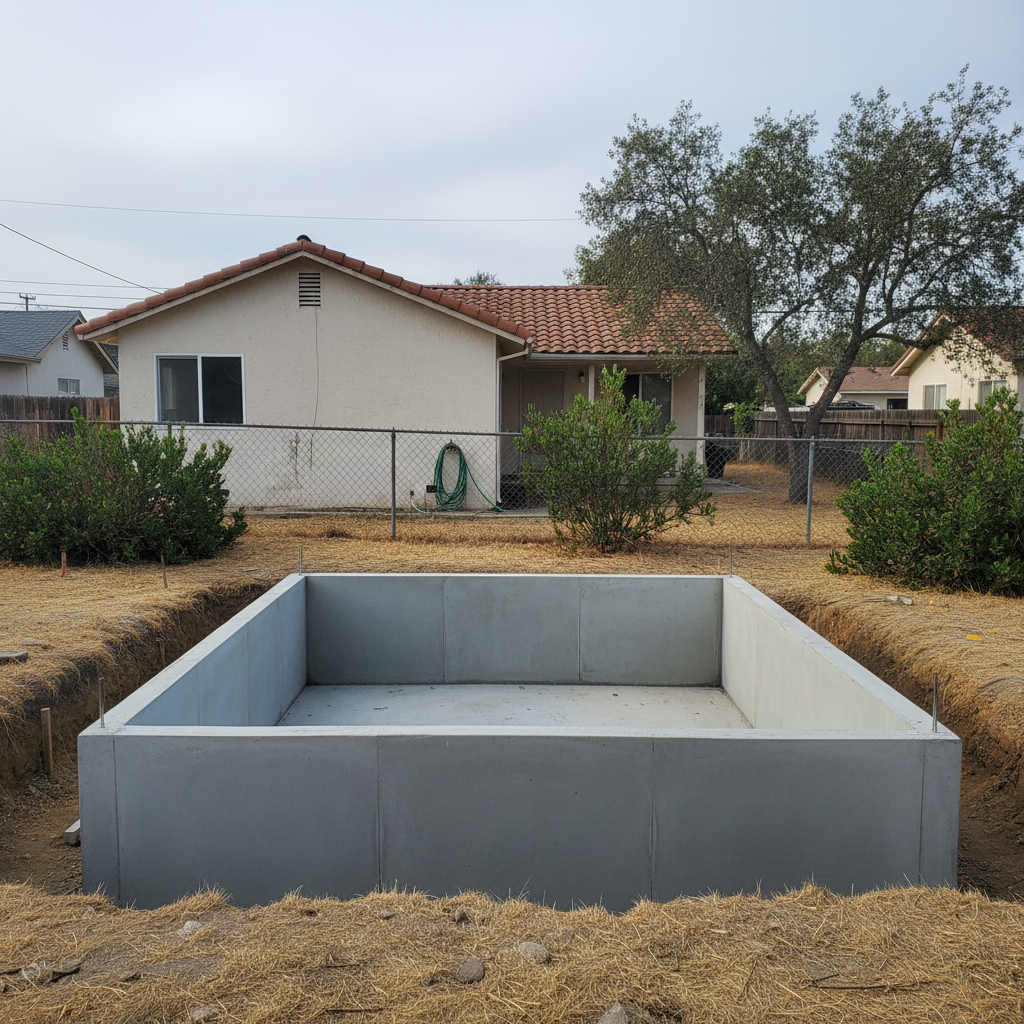
Shed pads, garage slabs and small foundation work need the base compacted and leveled before a single bag of concrete shows up. We check drainage and vapor barrier where it matters, since a slab poured over soft fill will settle no matter how well it's finished.
Not every crack means the slab is failing. We'll tell you if it's surface shrinkage you can ignore or a sign the base underneath has washed out or settled, and for structural cracks and heaved sections we cut out the bad concrete and pour a new section doweled into the old slab.
Walkways get the most abuse from tree roots pushing up from underneath and from water pooling at low spots. We remove problem roots where we can and grade the new path to drain, with joints spaced to control where it cracks instead of letting it crack on its own.
Steps need to be built to code rise and run so nobody catches a toe going up them. We form and pour steps and porch slabs together where we can, so they cure as one piece instead of separating at the seam a year later.
If your existing slab is sound underneath but the surface is pitted, scaled or discolored, an overlay can fix the look without a full tear-out. It costs less than replacement, but it only works if the base slab isn't cracked through or settling.
Retaining walls hold back soil on sloped lots, and the ones that fail usually failed on drainage, not strength. We install drain rock and weep holes behind every wall we build so water doesn't build up pressure against it.
Before any repour, the old slab has to come out clean, and we haul it off instead of leaving broken concrete stacked at your curb. We saw-cut the removal area first so we don't crack concrete you're keeping next to it.
Four steps, and no surprises in any of them.
You tell us what you want doing, we look at what is actually there, and we ask the awkward questions early.
In writing, itemised, free. If something might add cost later we flag it now rather than at the end.
Same crew throughout. We cover your floors, keep the dust down and tidy up before we leave each day.
You point out anything you are not happy with and we fix it before the invoice, not after.
Site visits and quotes cover Hanford and the following Central Valley towns.
Questions that tend to come up once a project is actually underway.
Describe the problem and we will tell you what it probably is. No obligation.